
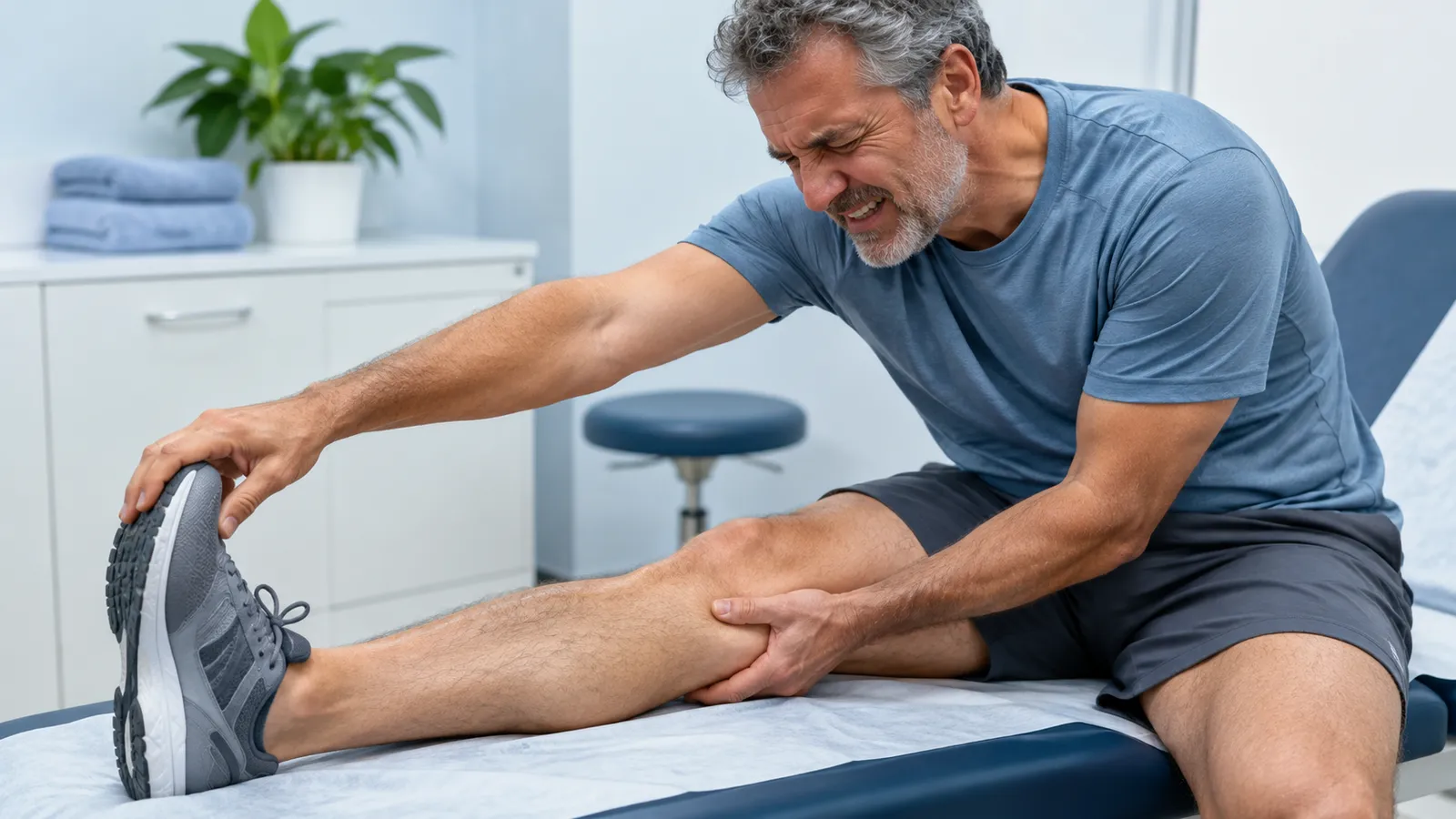
You want a cramp to let go, and you are probably also wondering whether it will keep coming back. Easing one and preventing the next are separate jobs, and this page covers the first.
What helps during a cramp
According to the NHS, stretching and massaging the muscle may ease the pain during a cramp, although most cramps go away without you doing anything.
So the answer is modest. Stretch the muscle, rub it, and expect it to pass. Keep the leg cramps page from the NHS handy as a reference, and see MedlinePlus on muscle spasms and charley horse from the same angle.
The part that shows up later
Relief in the moment tells you nothing about why the cramp happened. A cramp that returns means the quick fix is not the real fix, and you pay for that in lost sleep and repeated guessing.
If the discomfort feels more like an urge to move your legs than a tight muscle, read the NHS page on restless legs syndrome. The desk's page, what does restless legs syndrome feel like?, makes the comparison.
What follow-up this implies
Write down how often cramps come, what you were doing and how long they lasted. If the pattern repeats, take it to a clinician, and use when should leg cramps be checked by a doctor? to judge the timing.
What to ask about the long run
Ask what could be behind repeat cramps, what you should track and when to come back. Ask whether any of it points to a vein problem. A clear plan beats stretching the same muscle every night.