
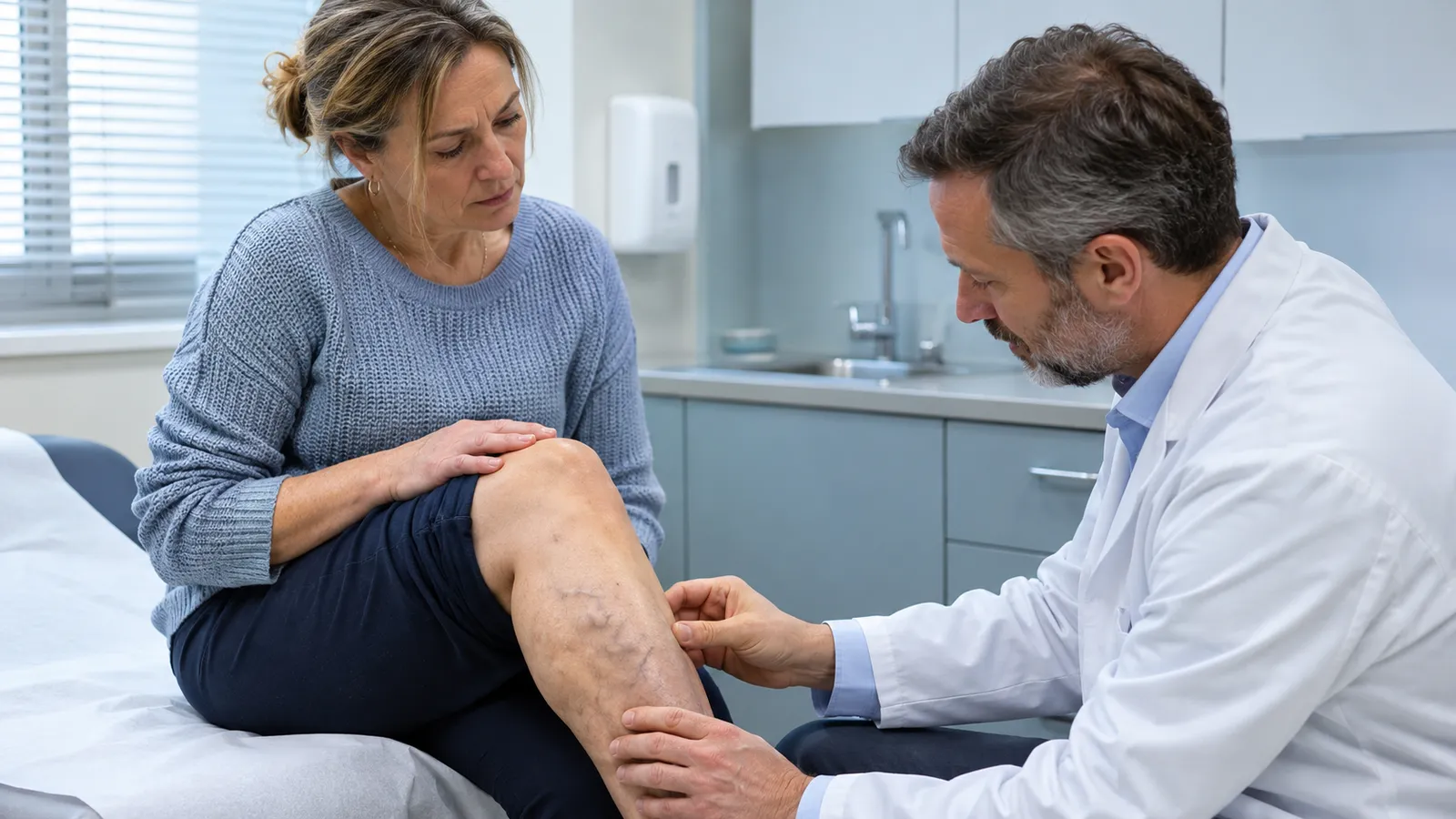
If you have varicose veins, the useful question is which changes should move an appointment from someday to this month.
When a referral becomes likely
According to the NHS, a GP may refer you to a specialist for tests and treatment if you have symptoms such as pain, heaviness, swollen legs, itching or skin changes. It also lists complications, such as ulcers on your legs, as a reason for referral.
It adds that treatment to improve how varicose veins look is not usually available on the NHS if they are not causing any other problems.
For a reader in Clifton, the symptom list is the part to keep.
The part that shows up later
Symptoms that seem minor in one month are easy to forget by the next. Note the date each one starts, which leg it affects and whether it is getting better or worse.
That record gives a clinician a starting point at follow-up, and it makes a slow change visible. You can read more on the causes of varicose veins at the NHS before the visit.
What follow-up the answer implies
Plan for a return visit, so choose a practice you can reach again, and read the tips for choosing a vein treatment specialist before you book.
Questions that follow once a vein looks wrong
- What training should a vein specialist have?
- What happens at a first vein appointment?
- When is leg swelling an emergency?
What to ask about the long run
- Are my symptoms the kind that need treatment, or can they be watched?
- What would make you want to see me sooner?
- What follow-up should I plan for, and how often?
- If these veins are treated now, what upkeep comes afterward?
This page is general information and does not replace advice from a clinician who has examined you.
Waiting is a decision with its own cost. Make it on purpose, with dates written down, instead of by drifting.