
If you are asking how chronic venous insufficiency is diagnosed, you are probably deciding whether a vein workup is worth the time and the bill. This desk answers leg-pain, swelling and vein-treatment questions for Clifton and the wider Passaic County area, so the answer below also covers what comes after the diagnosis.
The short answer
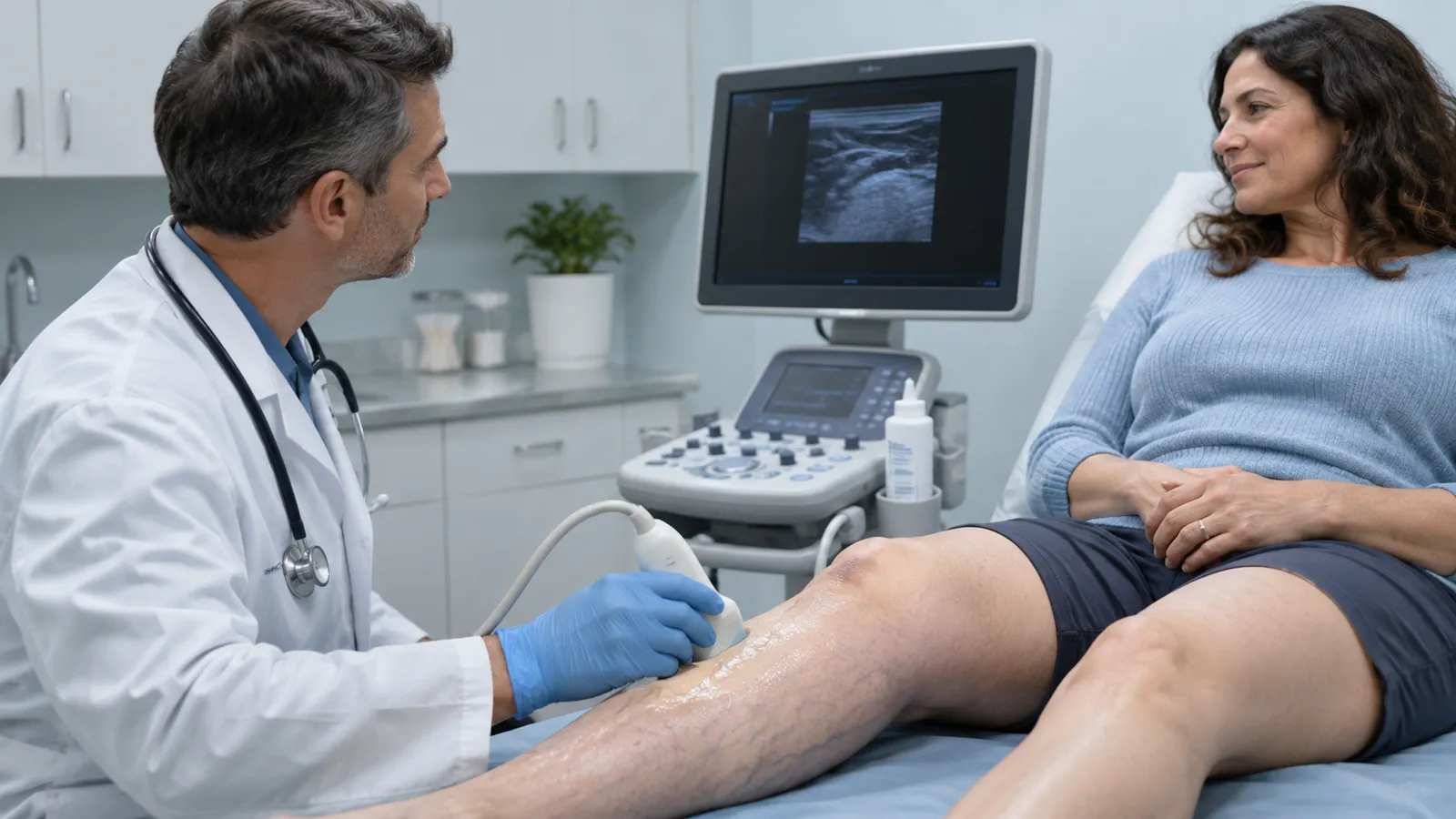
The patient guide at my.clevelandclinic.org states that chronic venous insufficiency is diagnosed through a physical exam and ultrasound imaging.
Two steps, then. The exam and the imaging name the problem. They do not tell you what keeping it in check will take over the years that follow.
What only shows up later
A diagnosis is a starting measurement. The cost that surprises people arrives afterward, in repeat visits, in the upkeep you carry at home, and in whatever the plan needs to stay effective. Ask for those numbers at the same visit where you hear the diagnosis, not after you have already agreed to a plan.
For more reading on the condition itself, the MSD Manual Professional Edition entry on chronic venous insufficiency and post-thrombotic syndrome and the MedlinePlus Medical Encyclopedia article on venous insufficiency are two places to start.
Follow-up and upkeep to expect
Treat the first visit as the first of several. Before you leave, get the follow-up schedule in writing, and ask what changes at each visit would trigger a different plan. If you want to know what a first appointment looks like, our page on what happens at a first vein appointment walks through it. Skin changes are another reason people come in, covered in what skin changes come with venous insufficiency.
What to ask the clinician about the long run
Choosing who examines you matters as much as the exam. The Society for Vascular Surgery and the guide to choosing a vein treatment specialist are worth reading before you book.
Then bring three questions:
- What will you track at later visits, and how often will I come back?
- What upkeep do I take on at home, and what does it cost over time?
- What would tell us this plan is not holding up?
A clinician who answers all three plainly is pricing the whole course, not only the first fix.