
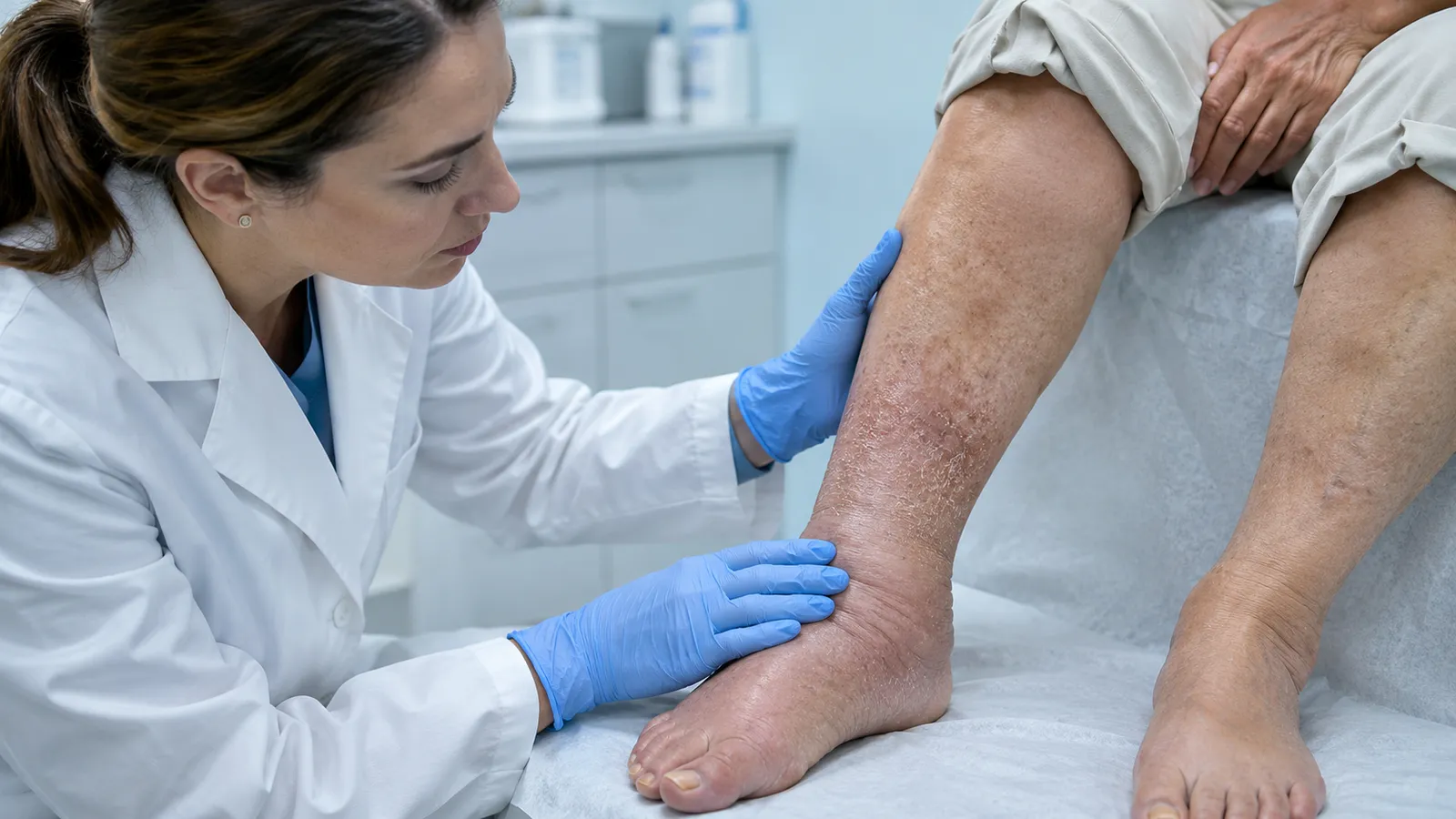
You have noticed something odd on the skin of your legs and want to know whether it belongs to a vein problem. You may be deciding whether to book a visit or keep watching.
The skin changes on the list
According to MedlinePlus, skin changes in the legs include swelling of the legs, irritated or cracked skin if you scratch it, and red or swollen, crusted, or weepy skin (stasis dermatitis).
Treat that list as a set of things to report, not a checklist to pass or fail. The article on venous insufficiency from MedlinePlus puts them in context. For the clinician's view, the MSD Manual Professional Edition has a page on chronic venous insufficiency and post-thrombotic syndrome.
The part that shows up later
You see your own legs every day, which makes change hard to judge. A dated note, or a photo, shows a clinician what has changed far better than recall.
What follow-up this implies
Bring the note to a visit and ask for a plan, not only a name for the problem. Then read how is chronic venous insufficiency diagnosed? and can venous insufficiency be treated without surgery? so you know what the plan might involve.
What to ask about the long run
Ask what the skin should look like if things are going well, and what would mean you should return. Ask what upkeep the treatment needs and who handles it. Ask what you should keep watching after the first visit.